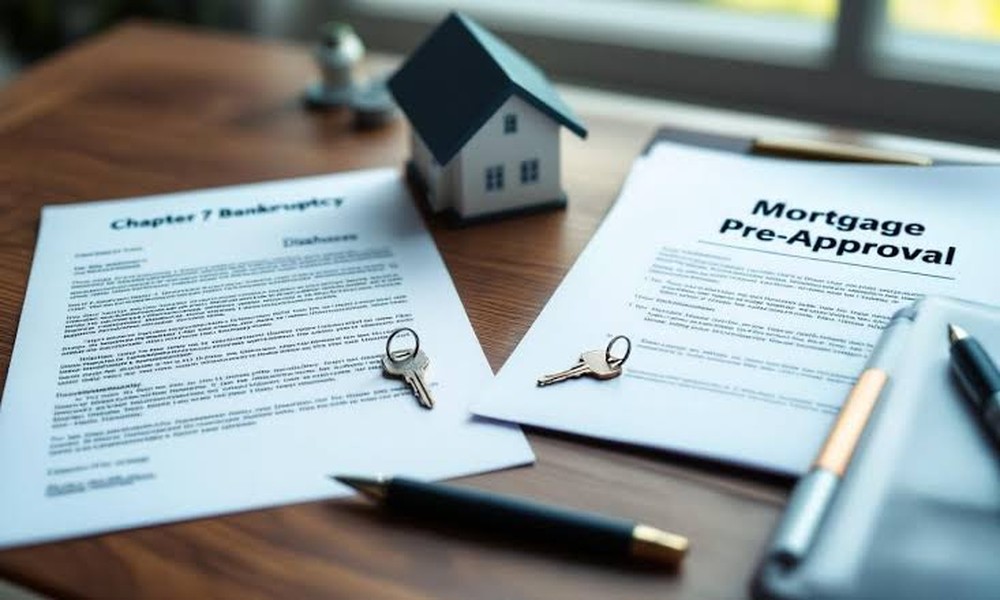
When you file Chapter 7, somewhere in the fog of paperwork and shame and relief, a quiet thought shows up. I’ve probably ruined any chance of ever owning a home.
You haven’t. I want to say that plainly before anything else, because fear is almost always bigger than the reality. Bankruptcy isn’t a permanent mark of exile from homeownership. It’s a waiting period plus a rebuild, and both have clear, knowable rules. Once you can see the timeline, the whole thing stops feeling like a sentence and starts feeling like a plan.
Here’s what that plan actually looks like.
The Waiting Periods are Shorter Than You’ve Been Told
Most people assume bankruptcy means seven years in the wilderness before a lender will look at them. That’s the number that sticks around in popular memory, and for most home loans, it’s simply wrong.
The actual waiting periods, measured from your discharge date and not your filing date, look like this in 2026:
- FHA loan: about 2 years after a Chapter 7 discharge. With documented extenuating circumstances, such as a job loss or a medical crisis that was genuinely outside your control, it can be as little as 1 year.
- VA loan: roughly 2 years, for eligible veterans and service members.
- USDA loan: about 3 years, for rural and many suburban properties.
- Conventional loan: the longest wait, typically 4 years after discharge.
Two years. For a lot of people, that’s the difference between “someday, maybe” and “I could be in a house by the time my kid starts second grade.” It reframes everything.
If you want the full breakdown by loan type, including how Chapter 13 differs, since you can often qualify during a Chapter 13 repayment plan rather than after it, this guide on buying a house after bankruptcy maps out each waiting period clearly.
Why FHA Is Usually The Path Home
For most people coming out of Chapter 7, the FHA loan is the realistic first door. There are three reasons.
It has the shortest standard waiting period at two years. It accepts lower credit scores than conventional financing, which matters a lot when your credit is still healing. And it asks for as little as 3.5% down, so you’re not also trying to save a massive down payment while rebuilding everything else.
The trade-off is mortgage insurance, which adds to your monthly cost. But for someone two years past a fresh start, a slightly higher payment on a house you actually own tends to beat a perfect loan you can’t qualify for yet. You can always refinance out of FHA later, once your credit and equity have grown up a bit.
The Two Years Aren’t a Waiting Room, They’re a Workshop
Here’s the mistake people make. They treat the waiting period as dead time. They wait. They do nothing. And on day 731 they discover that while the clock ran out, their credit didn’t actually recover, because recovery isn’t automatic. It’s built.
Use the time. Here’s the rebuild, roughly month by month.
- Months 1 to 6: Establish that the bleeding has stopped. Right after discharge, your job is simple. Never miss a payment on anything again. Get a secured credit card if you need to. Keep one or two small recurring charges on it and pay them off in full every month. You’re not trying to look rich. You’re trying to look reliable. Lenders want to see clean, boring, on-time behavior after the discharge.
- Months 6 to 12: Build a positive history. Add a second tradeline if you can, like another secured card or a credit-builder loan from a credit union. Keep every balance low relative to its limit. This is the stretch where your score starts climbing out of the basement, often faster than you’d expect, because the bankruptcy already wiped the old delinquent debt off your ledger.
- Months 12 to 18: Get your financial life mortgage-shaped. Start saving in earnest, for the down payment, closing costs, and a few months of reserves. Keep your debt-to-income ratio low by not taking on new car loans or financing furniture. Lenders will look hard at how much of your income is already committed, so the leaner you keep it, the better you’ll look.
- Months 18 to 24: Prepare to apply. Pull your own credit and check it for errors. Bankruptcies are notorious for leaving discharged debts incorrectly marked as still owed, which drags your score down for no reason. Dispute anything wrong. Get your documents in order. And start talking to a lender before you’re technically eligible, so you walk into month 24 ready instead of starting from scratch.
A Word About Credit Scores and The Rebuild
People obsess over hitting a specific number, but the texture of your credit matters as much as the score. A 640 built on a year of flawless on-time payments and low balances is a more convincing file than a 660 propped up by a maxed-out card you opened last week.
So focus on the habits, and the number follows. Pay on time, every time. Keep balances well under your limits. Don’t chase new credit you don’t need. Boring is the goal. Boring is what gets you approved.
When you’re ready to start the conversation, work with a lender who handles post-bankruptcy mortgages regularly. They exist, and they’re worth seeking out. A lender experienced in this specific situation, like Sistar Mortgage, can help you time your application to the FHA window and flag issues months ahead, instead of a generalist who treats your file like a problem to be rejected.
You’re Closer Than The Fear Lets You Believe
Chapter 7 feels like an ending when you’re in it. Financially, it’s closer to a hard reset. The debt that was drowning you is gone, and what’s left is a clean, if intimidating, blank page.
Two years of steady, unglamorous effort. That’s the real distance between a fresh start and a set of house keys. Not seven years. Not “never.” Two years and a plan you can actually follow.
Start the clock with intention, and the day you’ve been quietly afraid you’d never reach shows up sooner than you think.